
Imagine there was a mysterious and elegant metal that would give a unique look to any piece of jewelry, and that would also have a series of qualities that would enhance its final result by improving its properties. This metal is known as ruthenium.
From the platinum family, ruthenium (Rh) was discovered in 1844, in the Tsarist Russia ruled by Nicholas I, by the chemist and natural scientist Karl Ernst Klaus, and, due to its excellent properties (corrosion resistance and hardness), it is currently used in technology, mainly as part of conductors and catalysts.
The rarity of this precious metal and the challenges involved in isolating it make it an expensive element. Its shine, durability, and rarity make it highly valued in high-end jewelry.
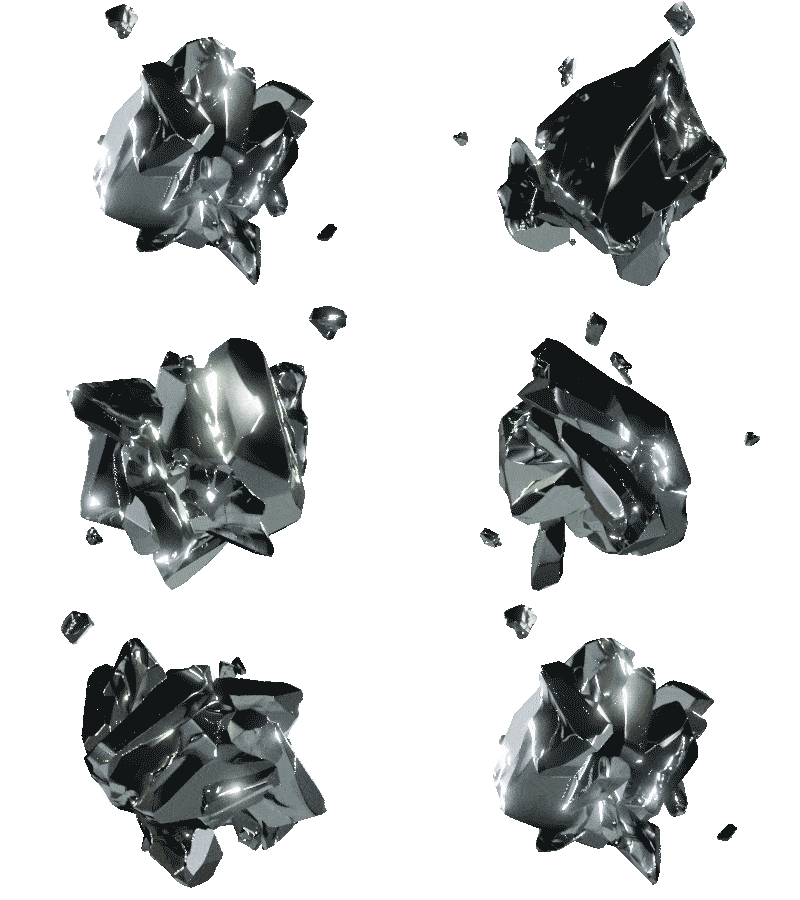
In the jewelry industry, this intriguing metal is often alloyed with platinum or palladium, giving them extra resistance to corrosion and tarnishing, as well as increased hardness.
It is also used as a coating for other metals, giving them that distinctive dark or even black finish that many people desire. While it is true that ruthenium plating can wear off over time, it is durable and acts as a protective layer that enhances the jewelry’s resistance to corrosion and tarnishing. There is no need to worry, as you can always have it re-plated to restore its original appearance.
Ruthenium plating is commonly associated with gold and silver, and this valuable metal is increasingly utilized as well. In a process known as electrodeposition, jewelry is submerged in a solution containing dissolved ruthenium salts. An electric current causes the metal ions to deposit evenly on the surface of the pieces, creating a thin layer that protects and imparts the distinctive color and shine.

Although it is resistant to corrosion, it is advisable to avoid contact with chemicals such as perfumes, cosmetics or cleaning products. On the other hand, keeping your jewelry in a dry place and protected from scratches will ensure its appearance is not altered. Jewelry cases are a great option for this purpose.
To properly clean ruthenium pieces, you can use the well-known jewelry cloth and even fine bristle brushes along with warm water and a non-abrasive soap to help soften and remove the residues that have been embedded in them.
If you are looking for a thorough cleaning, ultrasonic cleaners are an ideal complement to get rid of dirt traces, even those inaccessible to conventional cleaning methods. Despite its advantages, we recommend entrusting this task to an experienced jeweler, as improper handling could potentially damage the jewelry.
When in doubt, we strongly recommend taking the jewelry to a professional jeweler who will know how to deal with the cleaning process and thus restore the desired shine and finish.
Custom Jewelry: Minimum of 5 weeks, with time varying depending on the design and workload.
On Demand Jewelry: Minimum of 5 weeks, with time varying depending on the design and workload.
Exclusive jewelry: Limited and numbered production.
Quality control and careful packaging.
Delivery time according to location and shipping method.
Tracking number provided.
Free shipping within Spain. Standard rates apply for other locations.
14 days for returns from the date of receiving the order.
Free returns for creations purchased from our online boutique that have not been engraved, modified or personalized in any way.
How to Return
Contact via customer@realezo.com with your name, billing address and order number.
Include receipt and original packaging.
Modified or damaged products will not be accepted.
To exchange products, request a return and place a new order.
Legal warranty of 2 years from delivery.
Coverage for production defects or lack of conformity.
Contact customer@realezo.com for any questions regarding shipping, returns or warranties.
For more details, please feel free to check out our full Shipping and Returns Policies.
Rellena el siguiente formulario para solicitar acceso a la zona private de Realezo. Tan pronto comprobemos tus datos, recibirás un correo electrónico con los datos de acceso para que puedas disfrutar de la experiencia al 100% y acceder a material exclusivo.
1. Use a tape measure or string.
2. Place it around the wrist where you will wear it.
3. If you use a string, make a mark at the point where the string overlaps and stretch it to check its length. If you use a tape measure, it will already give you the thickness of your wrist at the point where it overlaps.
4. Help yourself with the size guide to choose the bracelet that best fits your wrist.
| Wrist measurement (mm) | Flexible Bracelet Size | Rigid Bracelet Size |
|---|---|---|
| 130 | 14 | 14 – 15 |
| 140 | 15 | 15 – 16 |
| 150 | 16 | 16 – 17 |
| 160 | 17 | 17 – 18 |
| 170 | 18 | 18 – 19 |
| 180 | 19 | 19 – 20 |
| 190 | 20 | 20 – 21 |
| 200 | 21 | 21 – 22 |
| 210 | 22 | 22 – 23 |
| 220 | 23 | 23 – 24 |
We recommend reading the following article: "SIZE GUIDE: BRACELETS".
You can also contact us through the following form or emailing us at info@realezo.com.
1. Choose a ring that you already have and that fits the finger where you will wear it.
2. Measure its inner diameter.

3. Use the size guide to compare and choose the ring that fits you best.
| Circumference (mm) | Inner diameter (mm) | Spain | Europe | USA |
| 44 | 14 | 4 | 44 | 3 |
| 45 | 14,3 | 5 | 45 | 3,25 |
| 46 | 14,6 | 6 | 46 | 3,75 |
| 47 | 15 | 7 | 47 | 4 |
| 48 | 15,3 | 8 | 48 | 4,5 |
| 49 | 15,6 | 9 | 49 | 5 |
| 50 | 15,9 | 10 | 50 | 5,25 |
| 51 | 16,2 | 11 | 51 | 5,75 |
| 52 | 16,6 | 12 | 52 | 6 |
| 53 | 16,9 | 13 | 53 | 6,5 |
| 54 | 17,2 | 14 | 54 | 6,75 |
| 55 | 17,5 | 15 | 55 | 7,25 |
| 56 | 17,8 | 16 | 56 | 7,5 |
| 57 | 18,1 | 17 | 57 | 8 |
| 58 | 18,5 | 18 | 58 | 8,5 |
| 59 | 18,8 | 19 | 59 | 8,75 |
| 60 | 19,1 | 20 | 60 | 9,25 |
| 61 | 19,4 | 21 | 61 | 9,5 |
| 62 | 19,7 | 22 | 62 | 10 |
| 63 | 20 | 23 | 63 | 10,25 |
| 64 | 20,4 | 24 | 64 | 10,75 |
| 65 | 20,7 | 25 | 65 | 11 |
| 66 | 21 | 26 | 66 | 11,5 |
| 67 | 21,3 | 27 | 67 | 11,75 |
| 68 | 21,7 | 28 | 68 | 12,25 |
| 69 | 22 | 29 | 69 | 12,5 |
| 70 | 22,3 | 30 | 70 | 13 |
For more information, we recommend you reading the following article: "SIZE GUIDE: RINGS".
You can also contact us through the following form or emailing us at info@realezo.com.
